


Baku: Where Ancient Walls Meet Glass Towers
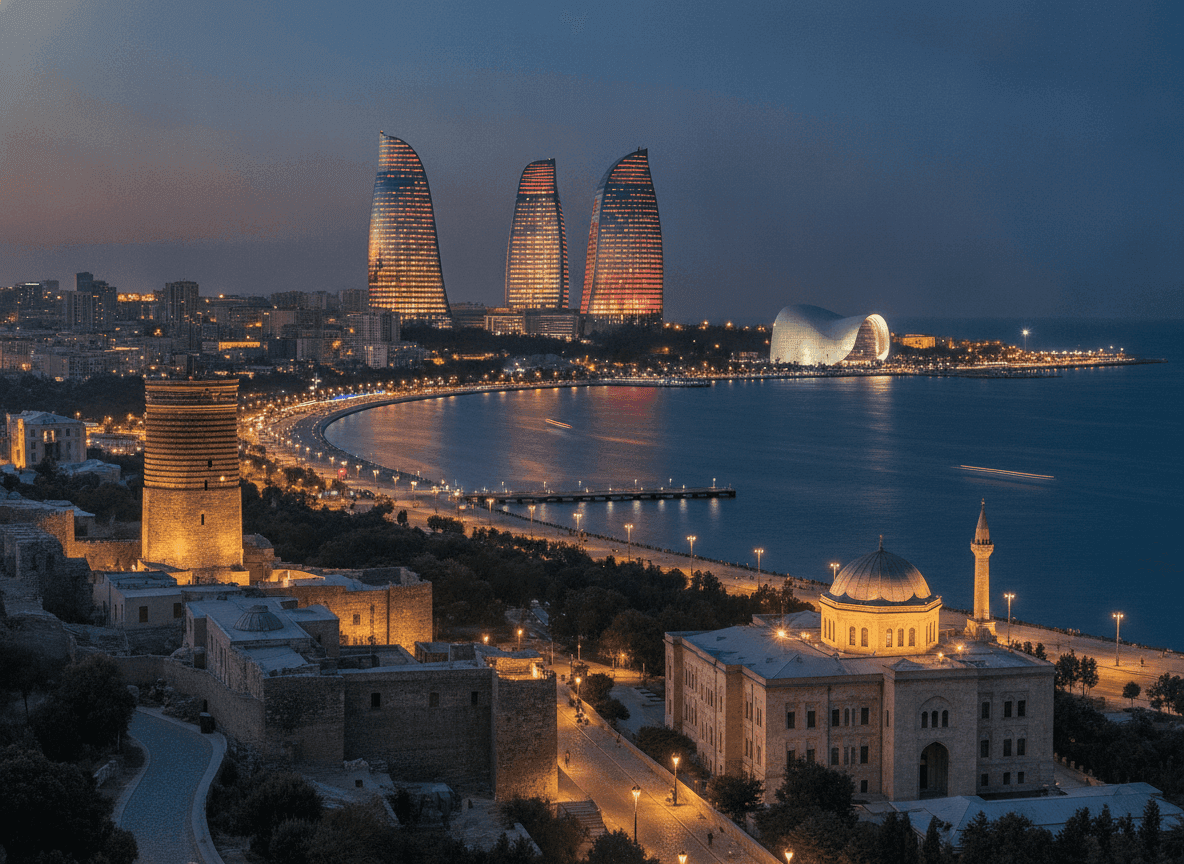
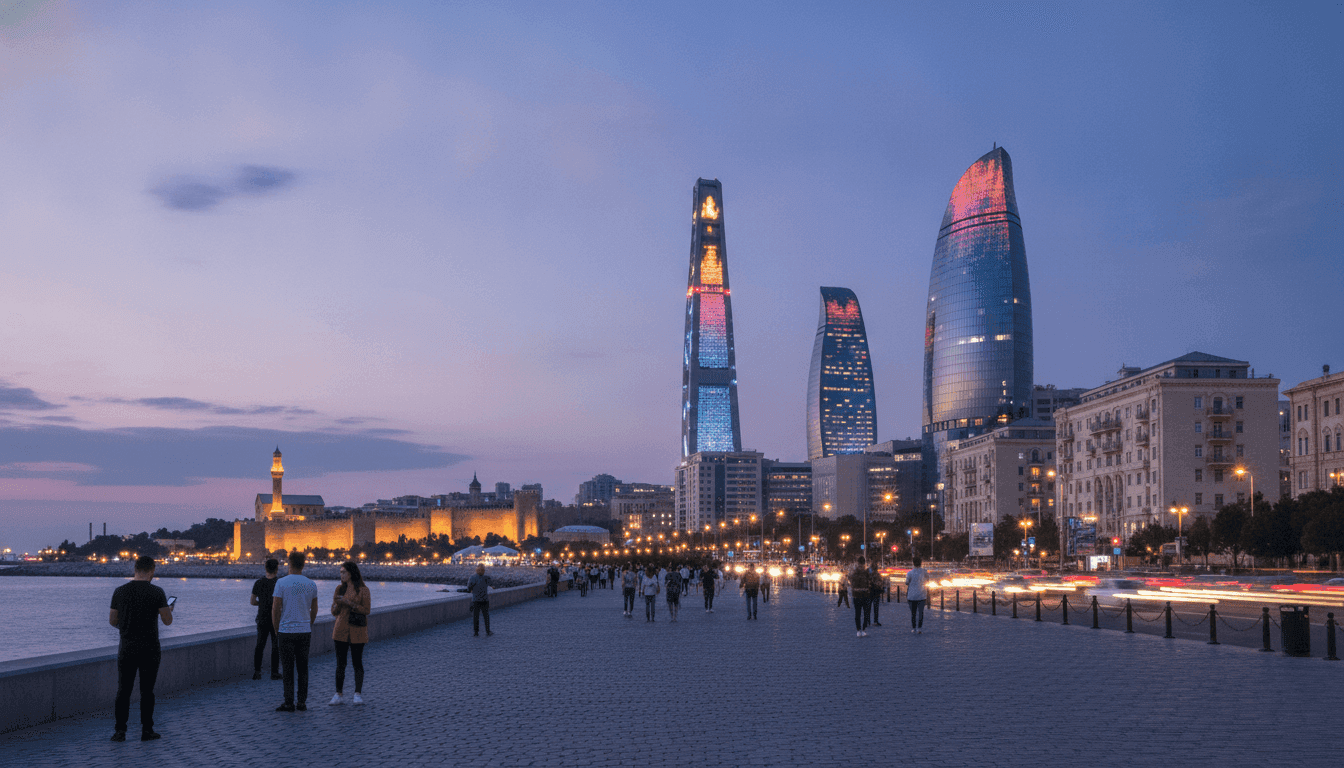
Baku is a capital city that has many contrasting features. It is located on the Absheron Peninsula, which juts out into the Caspian Sea. A small, walled medieval old town, Icherisheher (a UNESCO World Heritage Site) sits at the feet of some very modern buildings, including the famous three Flame Towers, a trio of very tall, ultramodern glass skyscrapers, shaped like flames. Each of the buildings is covered in hundreds of small LED lights that change color at night through a choice of red, gold etc.
The old walled city of Baku, or Icherisheher (meaning “inner city” in Azeri), is an area which is a UNESCO World Heritage Site and the best place to start your exploration of the city. This quaint, crowded area has the odd contrast of ancient, crumbling buildings, which date back to the 12th century, next to highly decorated and well maintained structures from the 15th century, such as the Palace of the Shirvanshahs. The 12th century Maiden Tower is one of the symbols of Azerbaijan, a 29m high tower which is thought to have been used as a watch tower, lighthouse, and even a zoo over the centuries.
Just outside the old city walls is the Baku Boulevard, a long stretch of parks, cafes and cycling paths along the Caspian Sea. The Heydar Aliyev Centre, a building designed by the famous architect Zaha Hadid and opened in 2012, is a great place to visit just to see the architecture. The building is made up of all curves, and is a great symbol of the modern Baku. The Centre houses a number of temporary exhibitions, and is a great place to go and learn about the culture of Azerbaijan.
The Nizami Street shopping district, that runs through the center of Baku, is home to international chain stores as well as small, local shops, cafes and restaurants. For a taste of daily life in Baku and the chance to stock up on local goodies such as fresh produce, dried fruits, spices and more, head to the weekend bazaar at Taza Bazaar.
Fun fact: Azerbaijan is home to some of the world’s oldest oil fields. The oil boom in late 19th century was even before the Texas oil rush and the vast wealth it generated turned Baku into one of the richest cities in the world at the time, earning many of its grand mansions in European style.
Azerbaijani Cuisine: Saffron, Lamb and the Art of Plov
Azerbaijani cuisine is shaped by the country’s unique position at the crossroads of the Middle East, Central Asia and Eastern Europe. It is extremely aromatic and highly hospitable with many local specialties to choose from.
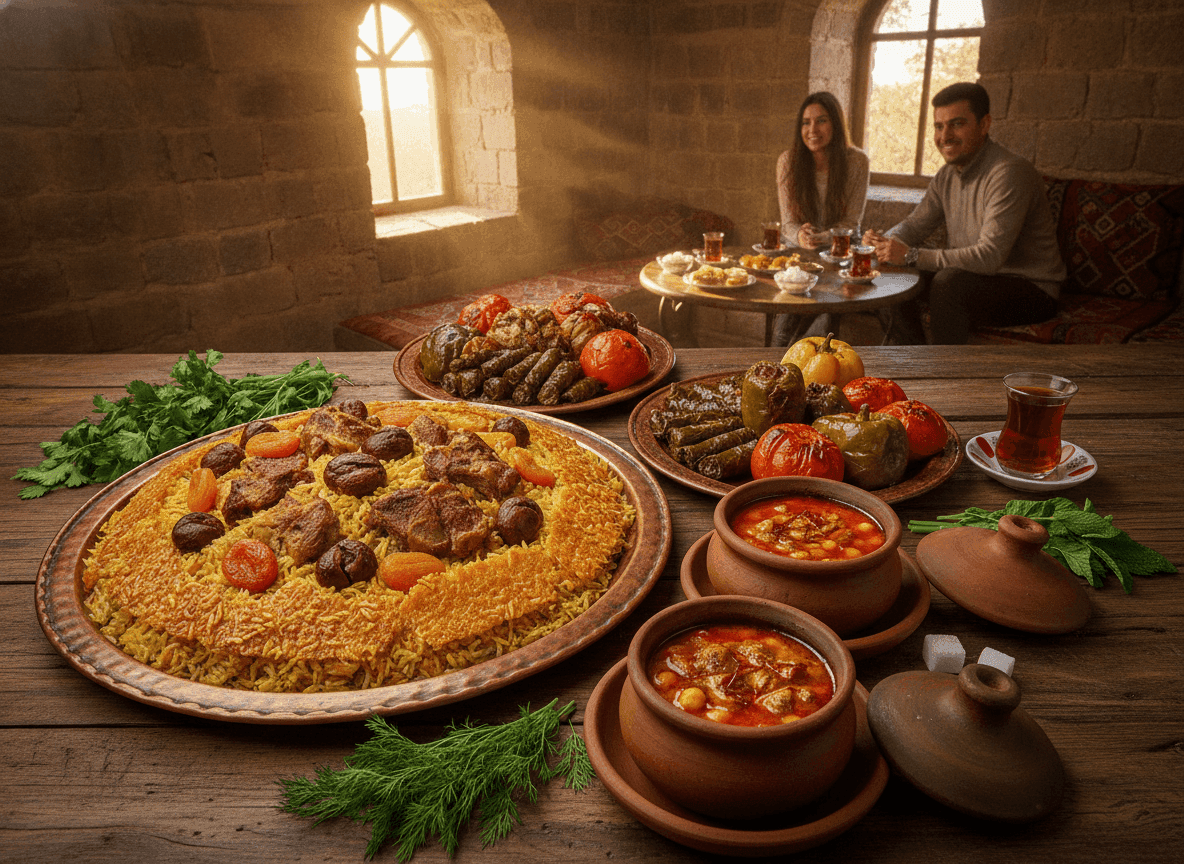
Plov, scented with saffron and containing dried fruits, chestnuts and meat, is the centerpiece of traditional meals. Plov is taken very seriously in Azerbaijan, and it is even considered the most honorable food to be served by a host. Of course, every region has its own version of plov (over 50 in total), but in Azerbaijan it is richer and more fragrant than in Iran and in the Central Asian republics, and is often served with a crunchy border of rice called gazmag.
Many forms of dolma can be found in Azerbaijani cuisine: grape leaves stuffed with a mix of ground meat, herbs, and rice, quince and aubergines, and tomatoes all filled with a mix of ground meat, herbs, and rice. Much of the cooking with meat in Azerbaijan uses lamb and the lamb is often cooked slowly in piti (stews made in clay pots) which are typically served with chickpeas, and with chestnuts and saffron added to give added flavor and color.
Baku is famous for its wide variety of restaurants, including some offering traditional Azerbaijani cuisine and others serving Georgian, Russian, Turkish and modern European food. For visitors to the Old City, there are plenty of quaint restaurants to choose from, many of which are based in historic caravanserais. For something really local, visitors can try a traditional chaykhana, or tea house, where black tea is served in pear-shaped glasses with sugar cubes provided. Local sweets are also available to accompany the tea, which is an integral part of Azerbaijani life and is served constantly at all times of day. In fact, tea is so important to the country that it is served at all occasions and refusing a glass would be considered to be slightly rude.
Trivium: Azerbaijan is one of the oldest tea drinking cultures in the world and at every occasion tea is served. Refusing a glass of tea would be considered slightly rude. And, as in Vienna and in the coffee houses of Istanbul, the tea drinking ritual is of great importance in Azerbaijan.
Beyond Baku: Fire Temples, Mud Volcanoes and Mountain Palaces
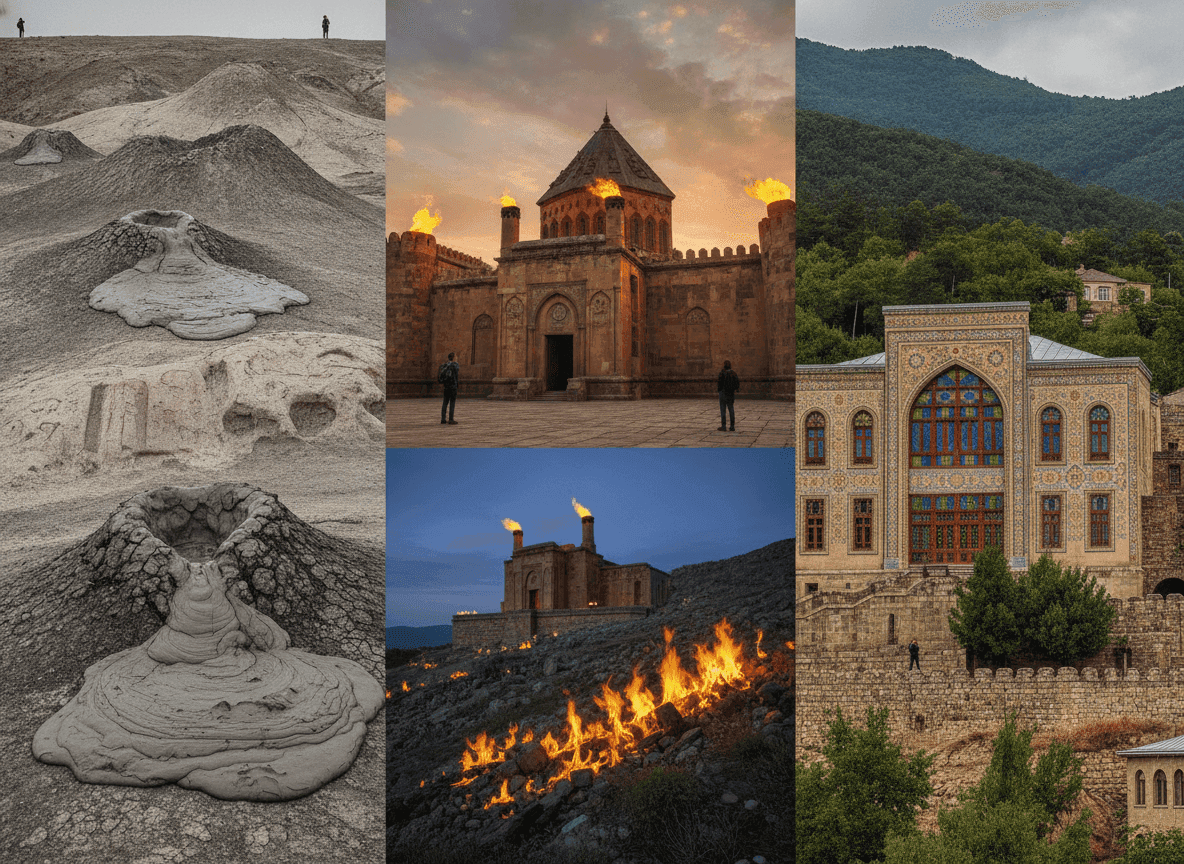
Beyond Baku, a wealth of landscapes and experiences await. Gobustan National Park, located about 60 km south of Baku, is home to over 6,000 ancient rock engravings as well as a unique field of over 50 active mud volcanoes, constantly bubbling and shifting.
The Absheron Peninsula is home to many more incredible sites. Ateshgah (The Fire Temple) is an 18th-century caravanserai which was built around a natural gas vent which for centuries was burning and was the object of worship for the Zoroastrian pilgrims from the Indian subcontinent. Yanar Dag (The Burning Mountain) is another incredible site with a natural gas fire which has been burning for decades along a hillside.
But beyond Baku, Azerbaijan is where Azerbaijan really opens up – and in some ways, surprises. Just south of the capital, the Gobustan National Park is home to over 6,000 prehistoric rock engravings as well as around 400 mud volcanoes, including a ‘field’ where the cones of volcanic earth shift and bubble constantly in a surreal natural setting. On the Absheron Peninsula, there’s the ancient Ateshgah Fire Temple, a 18th-century caravanserai built around a natural gas vent which burned for centuries and was worshipped by Zoroastrian pilgrims from India and beyond. Nearby is the Yanar Dag or Burning Mountain where a natural gas fire has been continuously burning for decades along the side of a hill. A short trip from Baku in the northwest of the country is the stunning region of Sheki, its forests and mountains a beautiful backdrop to traditional villages and the incredible 18th-century Sheki Khan’s Palace whose exterior is a kaleidoscope of stunning stained glass and exquisitely painted plasterwork – all created without the use of a single nail. </target_excerpt>
Baku has an amazing arts scene and music scene, left from the time the city hosted the Eurovision Song Contest 2012. As a result of that the city has numerous concert halls, galleries and other cultural institutions, which host different events all year round. For example, every autumn Baku hosts the Baku Jazz Festival with the participation of jazz musicians from Europe and the Middle East.
For independent travelers, visiting Baku and the surrounding area it is important to have mobile data to be able to navigate around, translate local signs and find out about less well known places to visit. It is therefore a good idea to purchase an eSIM for Azerbaijan before you travel so that you have data as soon as you land, without having to worry about finding a local SIM card on arrival.

eSIM für Azerbaijan
$4.99
Anzahl der Tage
Je mehr Tage du auswählst, desto niedriger ist der Preis pro Tag

Anzahl der eSIMs
Wie viele Personen reisen mit?
Gesamt:
$4.99