

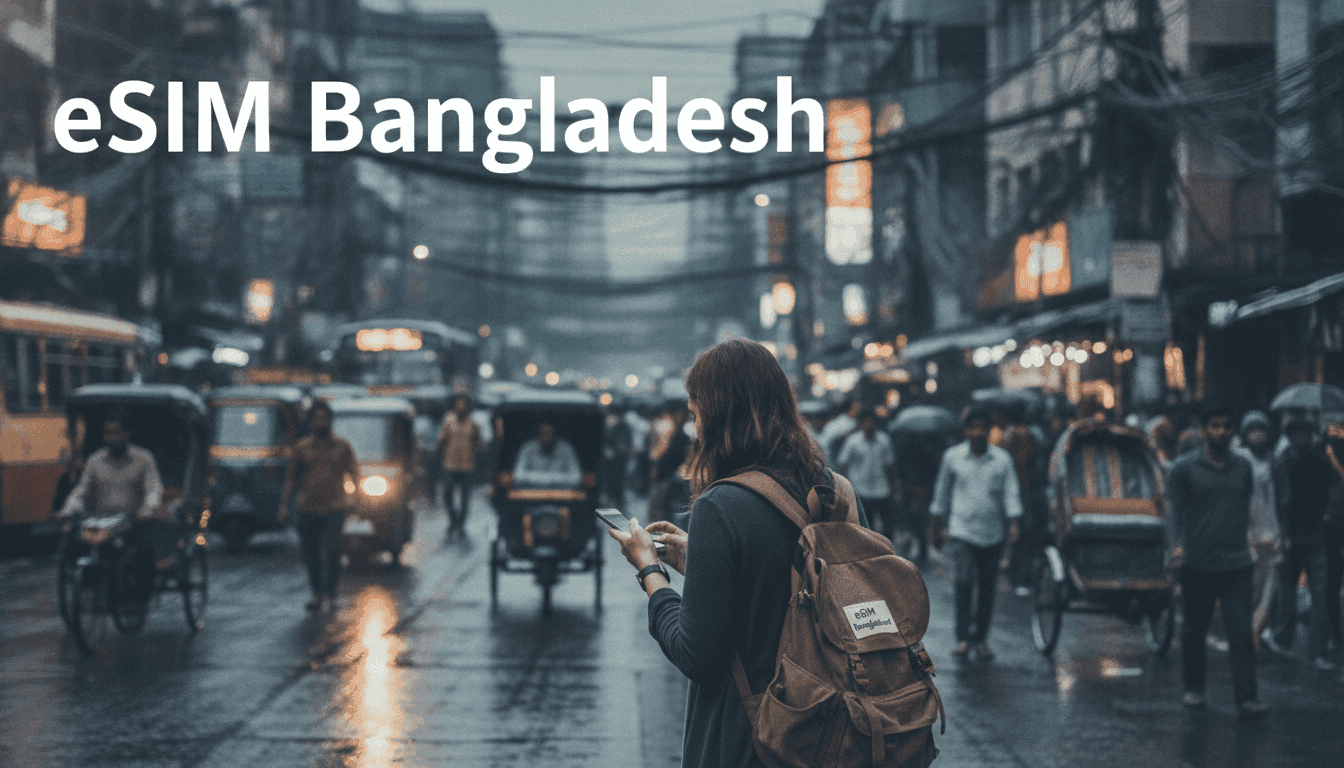


Dhaka: The City of Mosques and the River That Runs Through Everything
Dhaka is not an easy place to get into. The capital of Bangladesh is loud, dense, colorful and extremely alive. But with time to discover the city’s hidden treasures it may become one of the most rewarding places in South Asia.
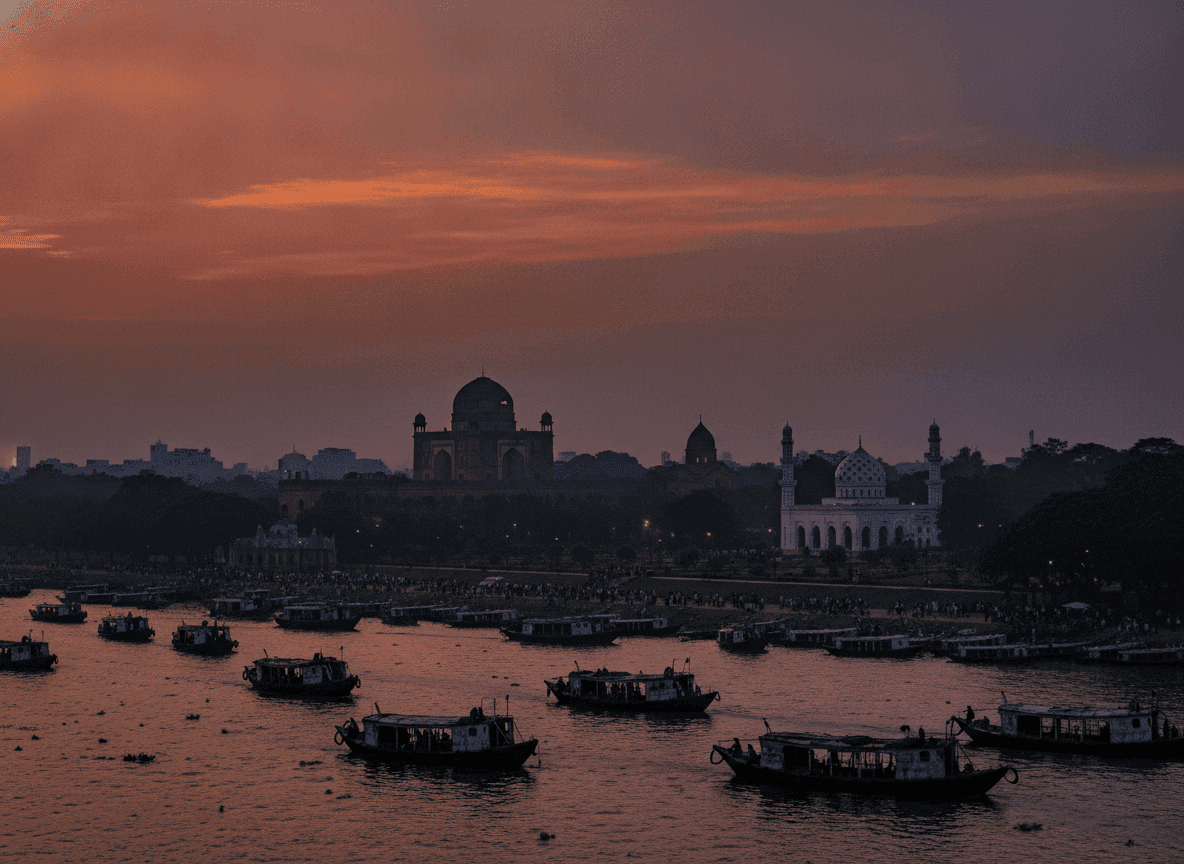
The historic Old Dhaka is where we recommend starting. Sadarghat, the main river terminal of Buriganga River, is the sight of hundreds of wooden rocket steamers, ferries and other boats that are constantly moving in every direction of the river throughout the day and night. They are taking on passengers and goods as well as loading up animals such as horses. It is a fantastic place to visit at dusk when the light begins to fade and the long lines of boats stand out as silhouettes against the fading light.
Lalbagh Fort, a 17th century Mughal fort in the heart of Old Dhaka. The fort was started to build by Prince Muhammad Azam, but he was called back to the royal court and the fort was never completed. It is a beautiful incomplete fort with a lovely mosque, a hammam and the magnificent tomb of Bibi Pari in its beautiful gardens. The gardens are the only peaceful spot in Old Dhaka and a must visit.
This interesting insight to the history of Dhaka comes from The Star Mosque in Armanitola, an exceptionally eye-catching building whose exterior is almost entirely covered in blue and white mosaic tiles, all in the shape of stars. The Armenian Church of the Holy Resurrection (1781), built by the remnants of a thriving Armenian merchant community, who were based in Bengal for centuries, is in a completely different style but none the less is of huge interest.
Fascinating fact: Dhaka is known as the City of Mosques. With an estimated 700 within the old city alone, the Star Mosque is by no means unusual and the constant calls to prayer that resonate throughout the day and night form a background to life in the city.
Bangladeshi Cuisine: Biryani, Hilsa and Centuries of Sweetness
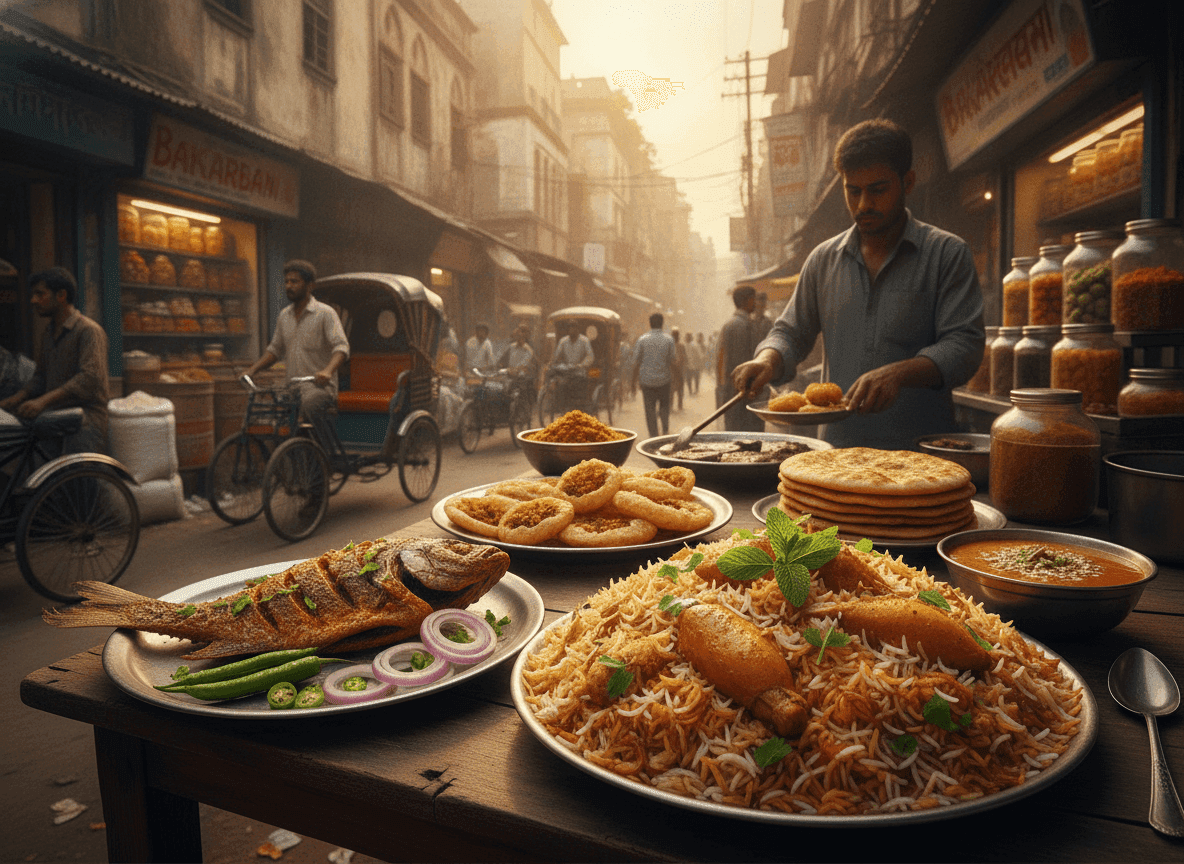
A wealth of ingredients including rice, fish and oil of mustard, are combined in a complex variety of ways in Bangladeshi food. The cooking of Dhaka, the capital city, in particular has been influenced by the Mughal court, and there is a rich tradition of bold meat dishes, fragrant biryanis and delicate sweets.
Dhaka’s street food is also home to many delicious baked goods such as the thick, layers of dough that make up the Bangladeshi Bakarkhani, found in centuries old neighborhood bakeries. And for those looking for a quick snack of some fried fish, there’s no better place to go than a street food stall serving up hot morsels of spices-coated turmeric dusted hilsa. The fish is often served with a side of a green chili and some pieces of raw onion to add to the flavor of the hot fried fish. Other dishes such as fuchka (gol gappa) are also found on street food stalls around the city and are filled with a spicy mixture of tamarind water and chopped up potatoes and often accompanied by a spicy sauce.
As the national fish of both Bengal and Bangladesh, Hilsa is a silver fish found in many rivers throughout the two countries. It is the main ingredient in dozens of dishes, some of which include Steamed Hilsa in Banana Leaf, Hilsa in Mustard Sauce and Fried Hilsa with Turmeric. Even more are served whole, either grilled or fried. It is during the Hilsa season that this fish is most prevalent on dinner tables throughout the country.
Sticking to street food, Old Dhaka is hard to match. For centuries the same Dhaka neighborhood bakeries have been producing the thick layered flat bread known as Bakarkhani. It has a slightly sweet and flaky texture and is best enjoyed freshly baked. The street food known as fuchka (the Bangladeshi version of gol gappa) is another favorite pastime of locals and is enjoyed at any time of day from stalls located on the street. The crisp covering is filled with a mixture of tamarind water and mashed and spiced potato.
Dhaka takes sweets very seriously. For centuries, thick, fermented yogurt that has been laced with caramelised sugar has been served as a sweet treat, known as mishti doi. And then there’s the roshogolla, deep-fried sponges of milk that have been soaked in a sweet syrup. The famous sweet shops in Old Dhaka, some of which are over a hundred years old, are worth visiting even if you don’t plan on going in – just to look.
The Sundarbans, Ancient Ruins and Travelling Smart in Bangladesh
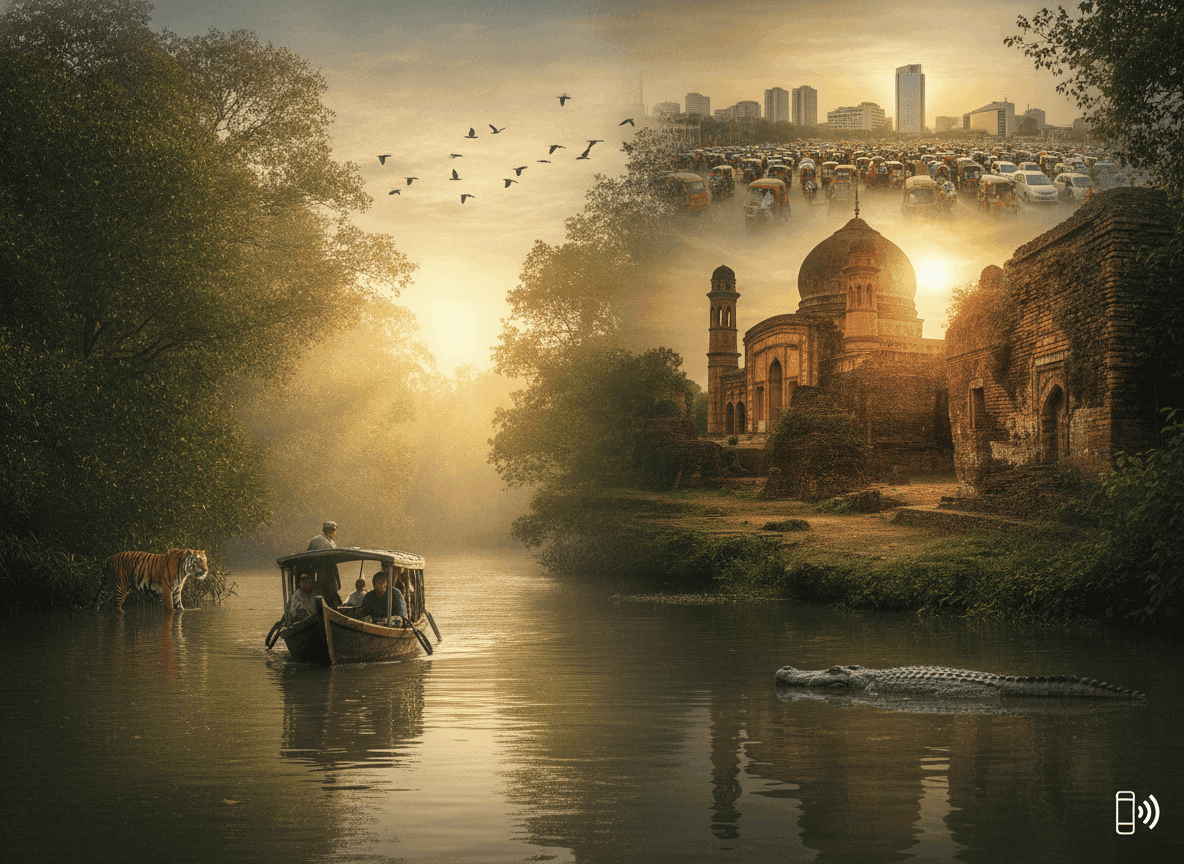
Water, water everywhere. Bangladesh is the only way to describe Bangladesh as it is situated at the confluence of three of the world’s largest rivers – the Ganges, the Brahmaputra and the Meghna. The country is comprised of one of the world’s largest river delta systems, and it shapes every aspect of life here.
The Sundarbans is a shared natural heritage site of Bangladesh and India. It is the world’s largest single piece of mangrove forest, and in 1997 it was declared a UNESCO World Heritage Site. Home to the endangered Royal Bengal Tiger, the threatened Irrawaddy dolphin, the largest reptile on earth- the saltwater crocodile and hundreds of species of birds, a visit to Sundarbans is simply an unforgettable experience. The excursions within the forest are carried out by boat plying between Mongla and Khulna. To have an unforgettable experience of Sundarbans tour, it is better to start early in the morning round about the break of dawn. While gliding silently through the watercourse of forest, it is a totally different experience from rest of the South Asia.
For the history buffs, there are the ancient ruins of Mahasthangarh in the north, one of the oldest archeological sites in the subcontinent, over 2,500 years old. The Sixty Dome Mosque in Bagerhat is another UNESCO Site dating back to the 15th century and is the largest medieval mosque in Bangladesh and a fantastic example of early Islamic architecture in Bengal.
In Dhaka, the Liberation War Museum is another site to visit to get an important insight into the 1971 Bangladesh Liberation War, which is an important part of the country and its people. The museum provides a powerful and moving insight into the events of 1971 and the subsequent years, which have left a lasting legacy in terms of the identity of Bangladesh and the pride of its people.
One has to be well prepared to make you way through Dhaka’s very congested roads and to know when to use rickshaws, CNGs or book taxis and cars through your mobile by various ride-hailing-apps. If you have an eSIM for Bangladesh you will have mobile data for Bangladesh as soon as you land, which is a huge comfort in a country where luggage collection can be a long-winded affair.

eSIM für Bangladesh
$2.99
Anzahl der Tage
Je mehr Tage du auswählst, desto niedriger ist der Preis pro Tag

Anzahl der eSIMs
Wie viele Personen reisen mit?
Gesamt:
$2.99