

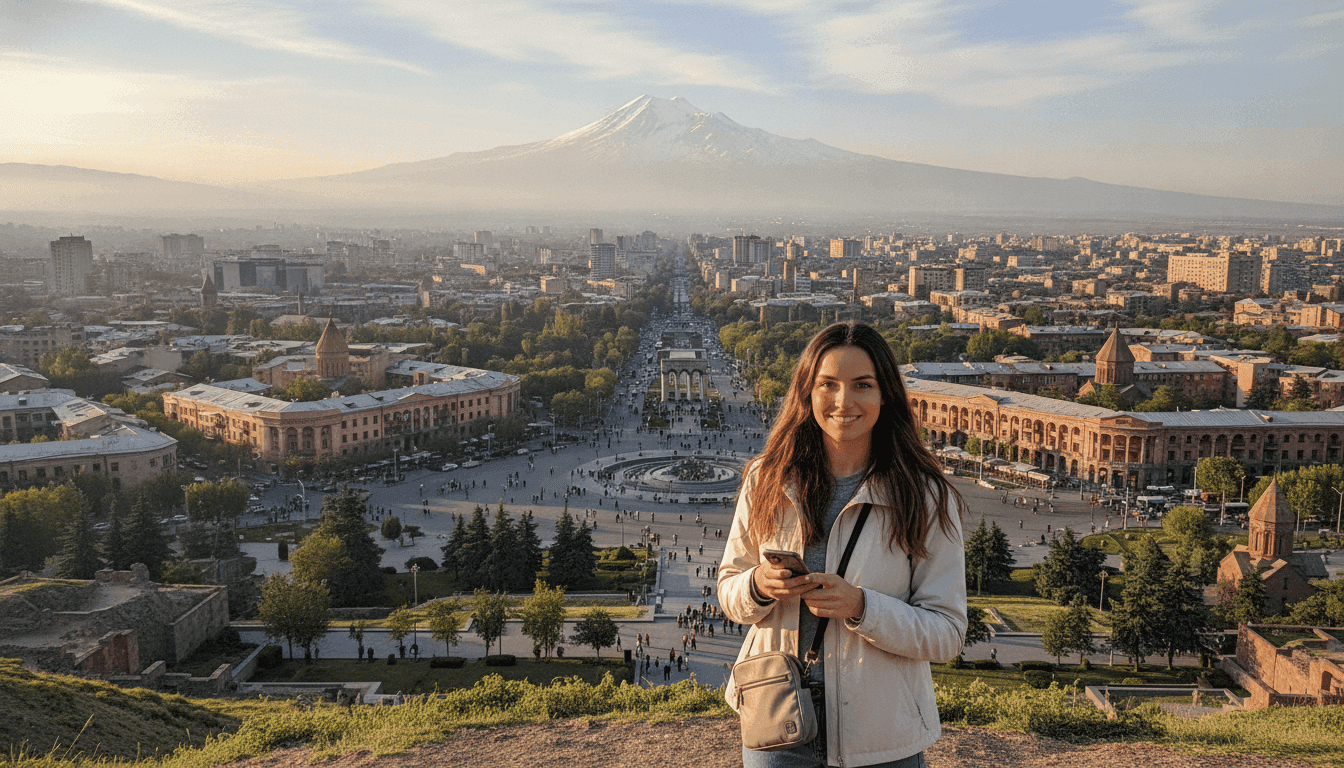


Armenia with an eSIM: Discover Yerevan and Beyond
Yerevan is one of the oldest continuously inhabited cities in the world and despite being so old, it feels like history is alive around you as opposed to being tucked away in some archive.
 Armenia
Yerevan: Pink City at the Foot of Ararat
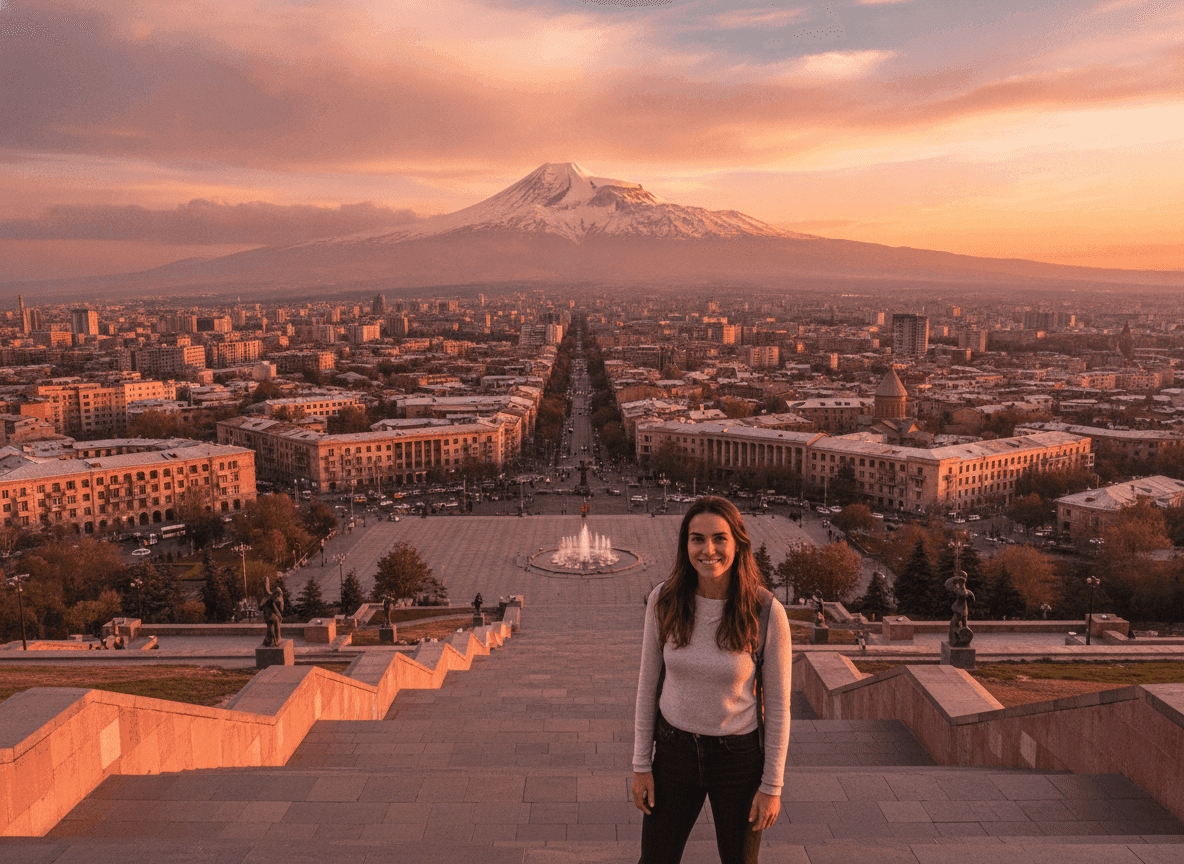
Yerevan is the oldest continuously inhabited city in the world, and I was pleased to see so much of it’s long history was still alive today. The capital of Armenia, sits in a natural bowl in the Ararat Valley and is dominated by the snow-capped peak of Mount Ararat that towers above the city on the Turkish side of the border. Mount Ararat is more than just a high peak to the Armenians, it is a symbol of their national identity and even appears on the coat of arms.
Much of Yerevan’s center is built of local volcanic rock tuff, carved out into beautiful pink and golden stone. It lends the city a warm look, especially around sunset. I began my tour of Yerevan at the beautiful Soviet square Republic Square, which contains a collection of fine government buildings and a very cool dancing fountain. This magnificent structure of interlocking stepped terraces, stairways and tunnels is the famous Cascade complex, built from the same local stone, with over 50 modern sculptures, and wonderful views of the city and Mt. Ararat from its upper reaches. The Tsitsernakaberd Genocide Memorial and its museum is a hilltop memorial, one of several around Yerevan, to the victims of the 1915 Armenian Genocide and offers views of the Black Sea some 60 kilometers to the west.
One of the most powerful sights in the country is the Tsitsernakaberd Genocide Memorial which is situated on a hill on the west of the city. A museum within the complex gives a factual accounts of the 1915 Armenian Genocide in quiet dignity to create informed Armenian citizens and to spread awareness to visitors of this recent atrocity.
For art lovers, The Matenadaran, is home to the world’s largest repository of ancient manuscripts. Many of the works are over 1,000 years old and are considered to be of the greatest national and international importance. The Museum of History of Armenia, and the National Gallery also are of great cultural interest to visitors to Yerevan.
Food and Drink: A Table Worth Sitting At
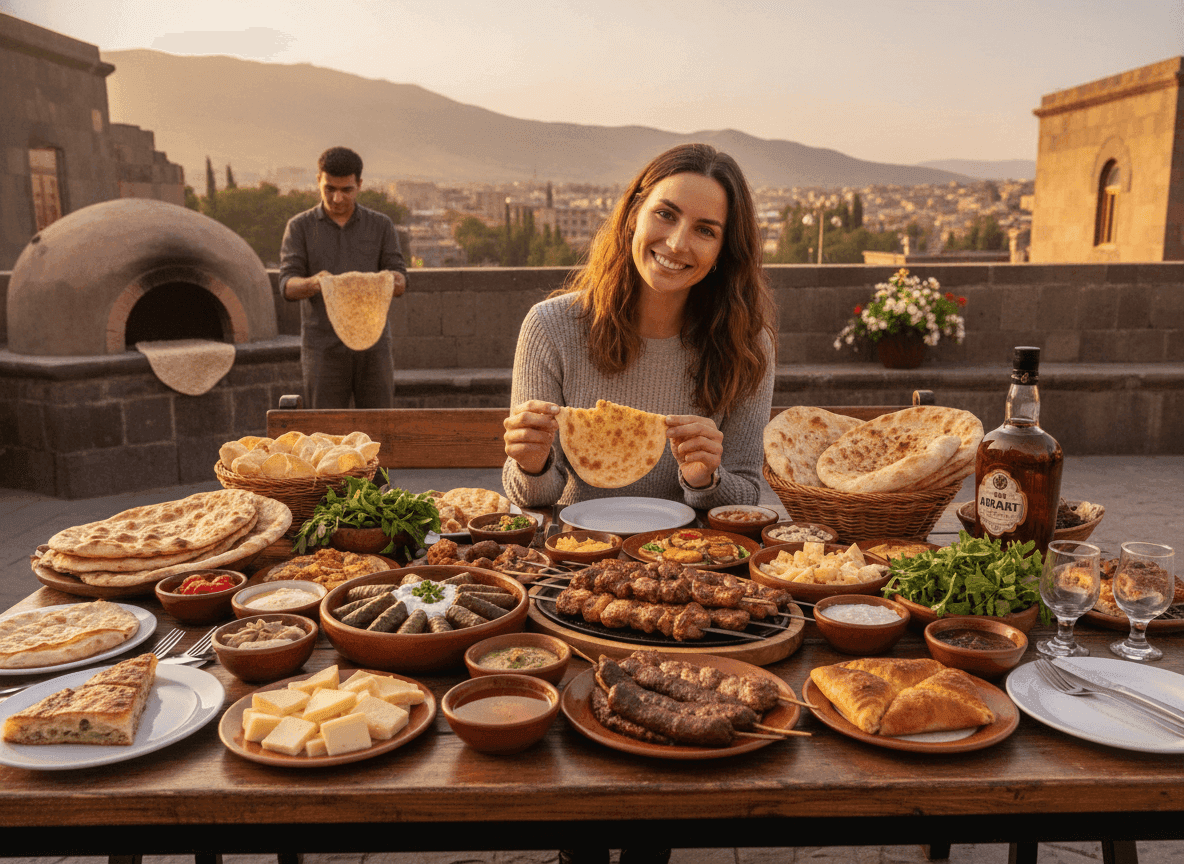
Armenian food is a largely unknown cuisine of great antiquity. Hearty, earthy, Armenian cuisine is all about celebrating food and company with great generosity. Typical meals are always long and convivial, with time to relax and chat.
A big part of Armenian cuisine is centered around khorovats (barbecues of pork, lamb or chicken that have been marinated for hours and then thrown on the coals. Khorovats can be found at every celebration and family gathering, and at every roadside restaurant too. Stuffed Dolma, made with vine leaves or hollowed out vegetables and filled with a mixture of rice and minced meat that has been spiced, are another staple. The dolma are usually served with a big scoop of matsun, Armenian yogurt that is very tangy.
Breakfast in Yerevan is a foodie’s dream come true. Freshly baked lavash, made in a traditional tonir (clayoven) and served with local cheeses, honey, herbs and eggs, makes for a fantastic morning meal. The UNESCO-listed cultural heritage of lavash is definitely worth trying fresh from the hands of a local baker.
In the cafe culture of Yerevan one can find many coffee shops, wine bars as well as restaurants serving traditional Armenian food as well as other international dishes, such as Georgian, Lebanese as well as modern European cuisine. Armenian brandy is very popular and produced in the Ararat Brandy Factory since 1887. The factory offers tours as well as tastings.
On a sweet note – gata is a traditional Armenian pastry, made with butter and filled with walnut and sugar. And for the more adventurous – there’s sujukh – walnuts strung on string and then dipped in a thick grape juice which dries into a chewy candy. It’s absolutely unique and certainly worth trying.
Beyond the Capital: Culture, History and Practical Tips
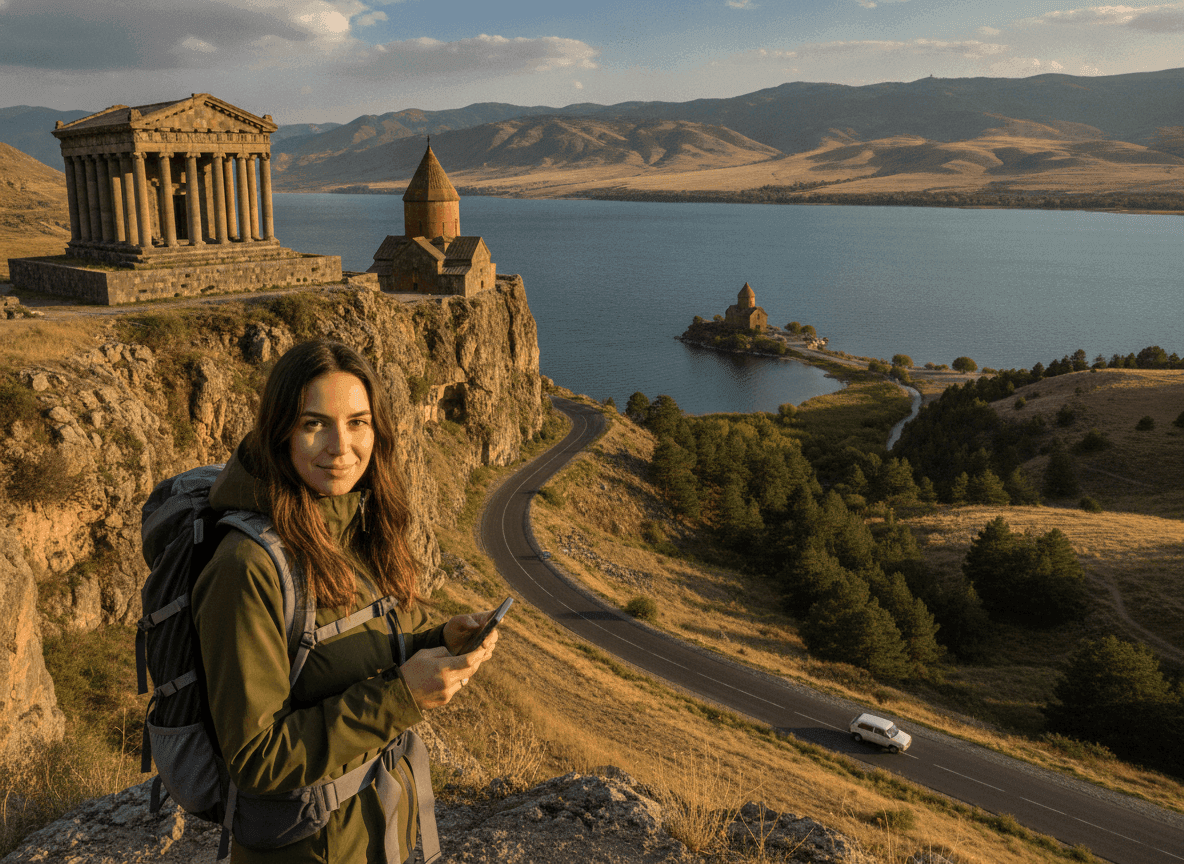
Armenia is a very small country and therefore perfect for traveling. Beyond the more you are curious the more you will find in this tiny country. As Yerevan is the capital of Armenia, most of the trips outside the city are daytrips. you can see many medieval monasteries, some of them even in gorges, ancient pagan temples, and in about an hour you can even go from semi-desert to alpine forest.
Garni Temple (28km from Yerevan, the only Hellenistic temple from Hellenistic period left in former Soviet Union from 1st century AD). And Geghard Monastery (UNESCO World Heritage Site), a lot of it is carved out of the face of the cliff.
The Lake Sevan basin is around an hour from Yerevan and is a large high-altitude lake. Sevanavank is a tiny monastery on a peninsula that was previously an island. It’s a stunning setting for a holiday base from which to go hiking and swimming in the summer.
Traveling through Armenia is relatively easy as a solo traveler, as the country has generally good roads and a very helpful local population. As a result, it is also very easy to wander around Yerevan on foot, and get to know the nooks and crannies of the old town. While it is generally easy to get by without speaking Armenian, as more and more locals learn English, for longer trips to out of the way towns and rural areas where English is less spoken maps and translation apps on your mobile will be very useful. An eSIM for Armenia is therefore something you should sort before you travel and there are plans available on staging.hilibre.com/destinations/armenia.
Armenians are famously hospitable. It is customary to accept an invitation to an Armenian’s home, and generally considered rude to refuse an invitation. So come prepared to be flexible, with an open schedule, with an open appetite, and with an open mind. Say yes!

eSIM pro Armenia
$2.99
Počet dní
Čím více dní vybereš, tím nižší je cena za den

Počet eSIM
Kolik lidí cestuje?
Celkem:
$2.99